Crete · Minoan & Mountains
Crete Κρήτη
The short answer
Crete is Greece’s largest island and the home of the Minoan civilisation, Europe’s earliest advanced Bronze Age culture. The palace of Knossos, Venetian Chania and Rethymno, and the pink-tinged beach of Elafonisi anchor a trip of five to seven days.
The Minoans built palaces at Knossos, Phaistos and Malia more than 3,500 years ago, and Sir Arthur Evans began excavating Knossos in 1900. Venetian and Ottoman rule later left Chania and Rethymno with harbours, fortresses and old quarters that still feel lived-in.
Crete rewards a car and driver: mountain villages, olive groves and gorges are far apart, and Cretan hospitality, with raki and food on the house, tends to appear when you least expect it.
Highlights
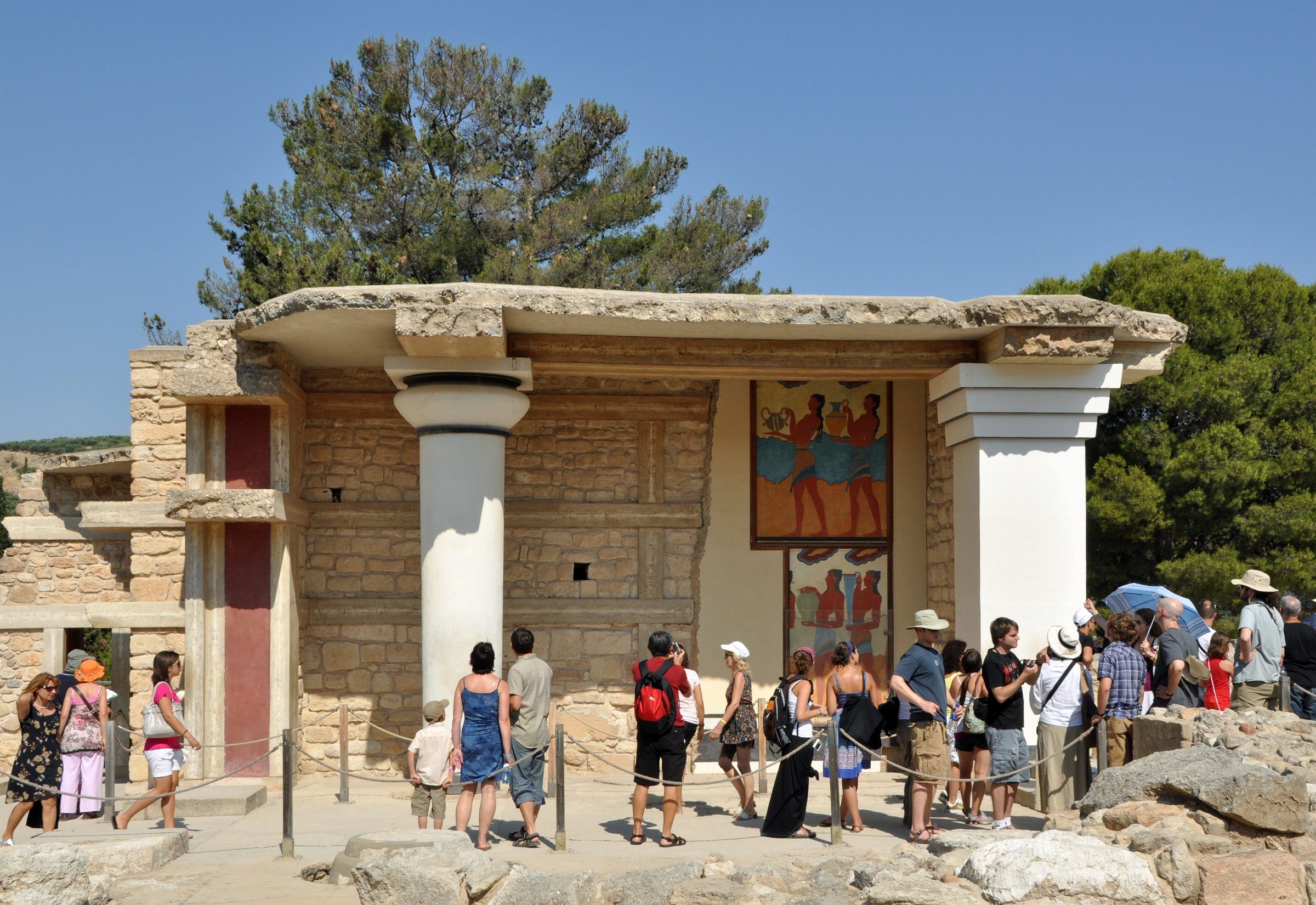
- Palace of Knossos
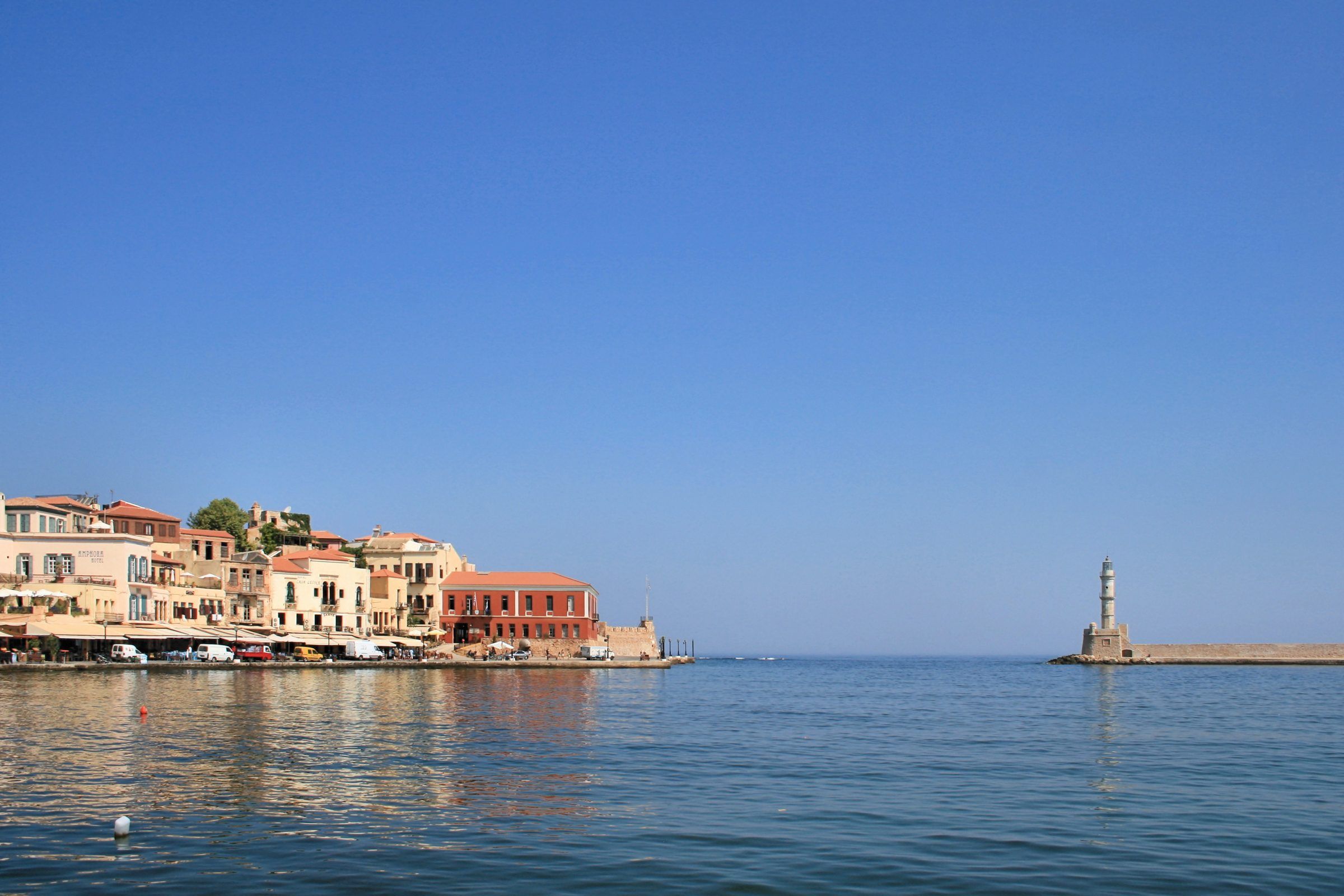
- Chania old harbour
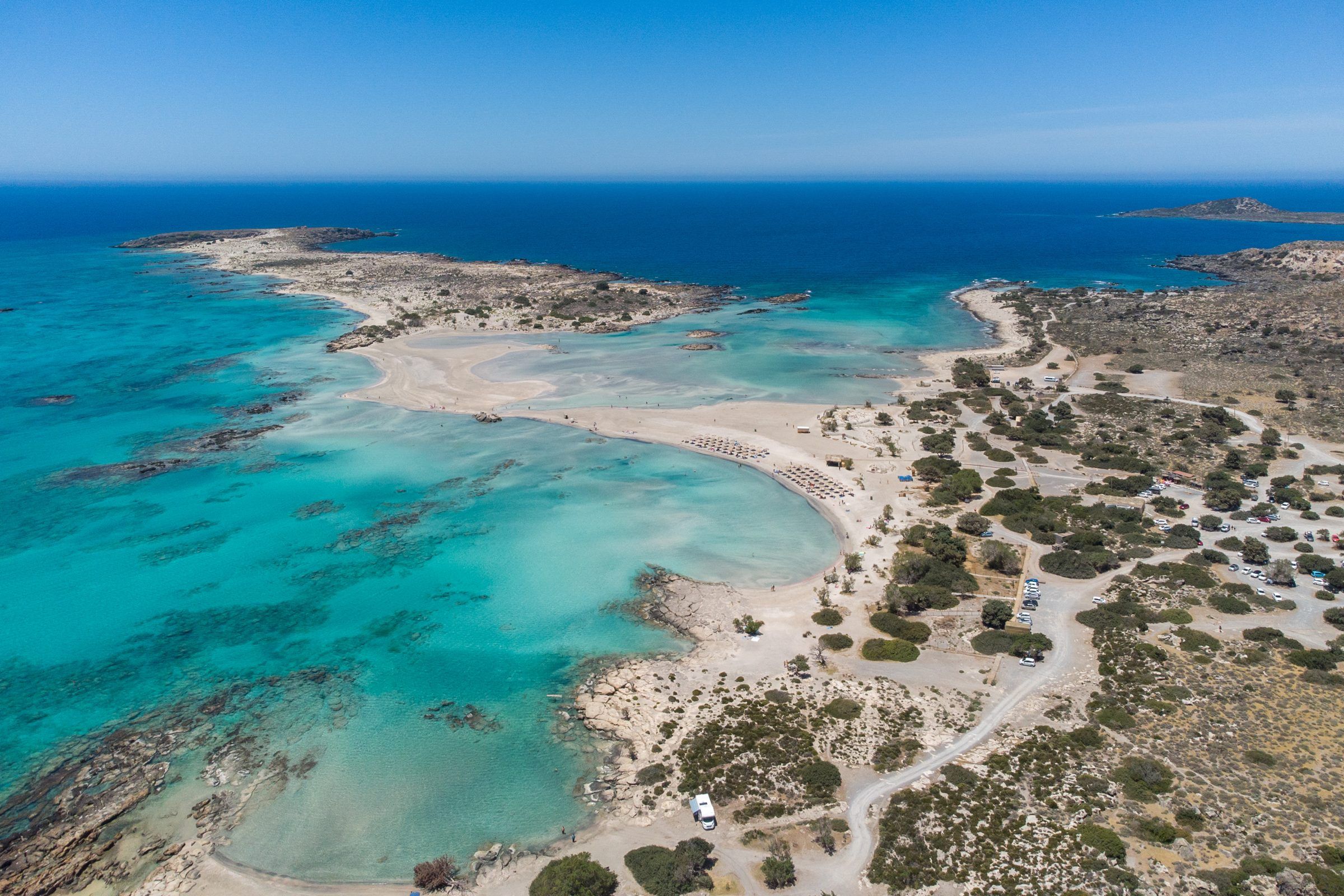
- Elafonisi beach
- Rethymno old town
- Cretan food and olive oil
Best time to visit Crete
April–June, September–October. Crete is warm from April to October. The Samaria Gorge is open only in the dry season (usually May to October, depending on weather and park authority decisions).
What to do
Knossos with an archaeologist-guide
The largest Bronze Age site on Crete. A good guide explains the Minoan palace plan, the frescoes and how much of what you see is Evans’s early 20th-century reconstruction.
Tip: Go at opening time; midday heat and coaches arrive together.
Chania’s Venetian harbour
A lighthouse, a mosque-turned-gallery and tavernas along the waterfront. Walk the old town’s lanes at dusk.
Olive oil and village lunches
Visit a family press and eat in a mountain village where the menu is whatever was picked that morning.
Elafonisi
A lagoon beach with pale pink sand on the south-west coast; reach it early in summer to avoid the crowds.
Where to stay
- Chania Old Town: Restored Venetian mansions turned boutique hotels.
- Elounda (east): The island’s five-star resort coast.
- Rethymno: Compact old town and a long beach, central for day trips.
Getting there
- Heraklion (HER) and Chania (CHQ) airports have direct seasonal flights from the UK and year-round flights from Athens.
- Overnight ferries link Piraeus with Heraklion and Chania.
Local tips
- Distances are larger than they look: Chania to Heraklion is about 140 km, roughly 2 hours by road.
- Many beaches have little shade; carry water.
Detail from Greek sources
- Greek sources place the first palace at Knossos at about 1900 BC, followed by destruction (probably by earthquake) around 1700 BC and a grander rebuilt palace. The final destruction is dated by different sources between about 1450 and 1350 BC, so we describe it as “around the 14th–15th century BC”.
- Sir Arthur Evans excavated Knossos in 1900–1913 and 1922–1930. His partial reconstructions used mainly concrete, which is why your guide will point out what is original and what is a 20th-century restoration.
- The palace is organised around the large Central Court, used for public gatherings, and the site is linked in myth to the Labyrinth, the Minotaur and Daedalus.
Greek-language sources: Discover Greece (el): Tour of the Palace of Knossos; Cretan Beaches (el): The Minoan Palace of Knossos.
Frequently asked questions
How many days does Crete need?
Five days covers Knossos, Chania and one beach; seven or more lets you add the south coast and Rethymno at a relaxed pace.
Is it better to hire a private driver in Crete?
Often yes. Roads are winding, distances are long and a driver-guide lets you enjoy the food and wine.
Private tours including Crete